Two brilliant minds of the 1920’s were ready to commit, what they considered the “perfect crime”, instead it was remembered as the crime of the century. Nathan Freudenthal Leopold Jr. and Richard Albert Loeb, born in 1904 and 1905, were seen as promising young men, coming from influential families and attending a prestigious school- The University of Chicago. Their case got so much attention since it challenged the public belief about intelligence and wealth being automatically connected to moral responsibility.
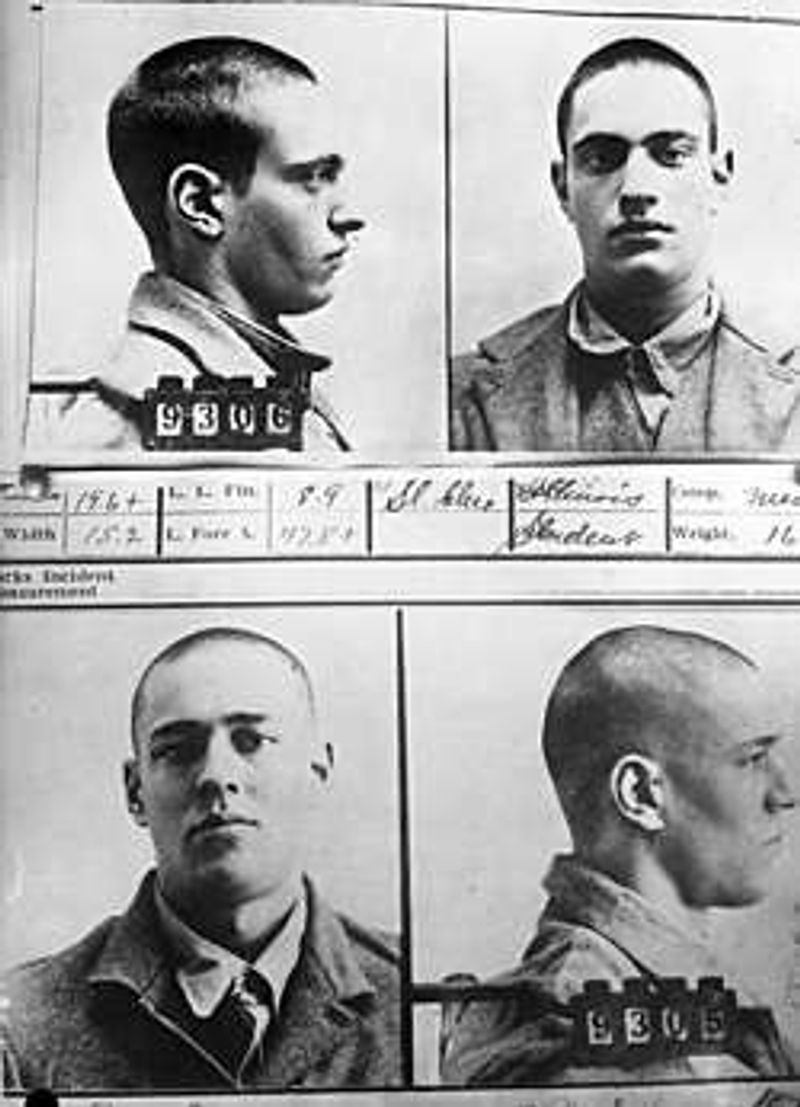
Leopold and Loeb did not act impulsively. Months before the crime they carefully considered all possible outcomes and planned the “perfect crime”. Their goal was not to gain money or get revenge on someone; it was about proving how their intellectual abilities and wealth got them above everyone else, and that the law did not apply to them. Both men created fake identities, prepared alibis and created a day plan to mislead the police. Their preparation is one of the most impactful parts of the case as it highlights how their confidence was transformed into the killing arrogance.
They believed that by planning every detail in advance, they could eliminate any chance of failure, treating the crime as a carefully controlled intellectual experiment rather than a real human tragedy.
They selected the victim based on his heritage, just to fit into their pre-prepared scheme, making this tragedy look more like some sort of experiment for the two killers. On May 21st, 1924, Leopold and Loeb were driving in a rented car around the wealthy part of Chicago, when they spotted a 14 year old Robert "Bobby" Franks, the son of wealthy Chicago watch manufacturer Jacob Franks, who was walking home from school. Richard knew him personally, and because of that, the young boy entered the car without any hesitation. As soon as he sat down, the killers struck him multiple times, resulting in deadly injuries. Afterwards Leopold and Loeb tried to make the situation look like a kidnapping to throw the police off their tracks.
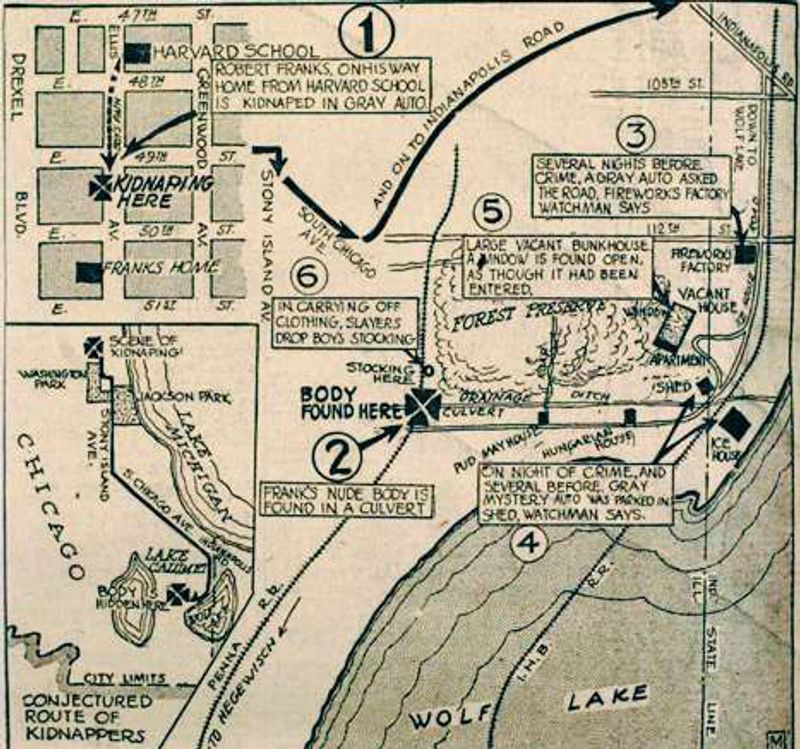
Nathan and Richard started to send notes to the family of Bobby requesting tens of thousands of dollars for them to get their son back. They assumed that their plan would work without any problems; however, the investigators quickly found the body, and the only evidence they had was a pair of eyeglasses. Due to the unique prescriptions and design of the glasses, the police tracked the glasses directly to Nathan Leopold, immediately placing him at the scene and exposing a critical flaw in what was supposed to be a flawless plan. Their alibi also began to collapse when Leopold claimed he was driving his own car with Loeb at the time of the murder, yet the car was proven to be in the garage for repairs that day, leaving them without a credible explanation for their whereabouts.
As the evidence started to add up, both killers confessed. In addition to the glasses and the failed alibi, investigators uncovered a wider chain of evidence, including the letter, which was typed on Leopold’s family typewriter, further confirming their involvement. They quickly went from the two “mastermind killers” to the biggest talk of the country, as it quickly spread in the newspaper. The reaction of the public was intense. Americans were fascinated about the fact that two young men with every possible advantage decided to commit such an awful crime. Many schools and universities debated whether intelligence was an excuse for immoral behavior, or if it increased responsibility. To some extent it even caused the rapid change of social values that was visible in the United States in the 1920’s.
The trial alone is significant. The families hired one of the best lawyers of that time, Clarence Darrow, who argued against the death penalty and used the psychological and social factors in their defense. By pleading guilty, Darrow avoided the whole jury trial and moved directly into the sentencing. The judge ultimately sentenced both killers to prison for life as well as additional years for the kidnapping, instead of an execution. Which resulted in Darrow's job being a success, mostly due to his final speech that lasted two hours: “They killed him as they might kill a spider or a fly, for the experience.” (Darrow, 1924).
“They killed him as they might kill a spider or a fly, for the experience.” (Darrow, 1924).
In the following years, the pair of Leopold and Loeb still drew attention to themselves. Richard was murdered by an inmate in prison, by James Day due to the claims of sexual assaults caused by Loeb, on the other hand, Nathan earned parole and after decades was able to live a quiet life in Puerto Rico. Today this case is not looked at the violence, but more at the psychological side of the killers and how it reveals the true side of human ambition and the consequence of never dealing with consequences.