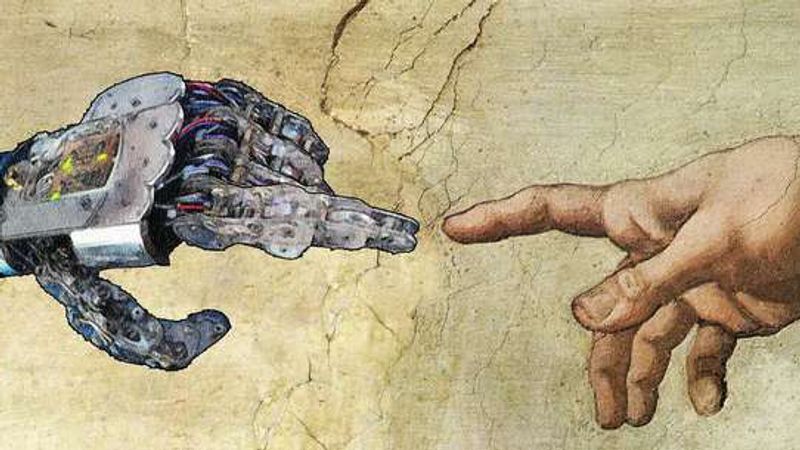
Oxford Languages defines art as the expression or application of human creative skill and imagination, typically in a visual form such as painting or sculpture, producing works to be appreciated primarily for their beauty or emotional power. Yet humankind began expressing itself long before art was defined: even in prehistoric times, many put their hands on the walls of caves and created items that were not necessary for their survival. Is art just a tool to express yourself, no matter if you are an animal, a human, or a robot? Pablo Picasso claimed: “Art washes away the dust from the soul of everyday life.” Art makes everything a little bit more special and personal – it makes our individuality stand out - it gives us a voice. In the age of AI’s fast development, the role of human creativity has come into question. Therefore, does AI’s voice count and can we determine what counts as creativity and what does not?
AI art may be art because art has no rules. If there should be no rules in an area, it should be creativity, because it is one of the few areas where we can think of anything, and it cannot be considered wrong. Yet AI-created works should not be considered art. Art is something you must pour yourself into – it should convey personal feelings and thoughts, and AI does not have that. Anything that AI creates is just a mosaic of other people’s works without giving them any credit whatsoever. Therefore, AI is not creating something original or striking, which art aims to be. Some artists argue that AI can push the boundaries of art much further, and because of it, our creativity might develop, but with the usage of AI, we will just lose our sense of self. There is not much that separates us from animals, and if we must use artificial intelligence to express ourselves, there is nothing. Of course, there are cases of people who are unable to express themselves due to disabilities or other reasons, but the issue with AI is that its outcome will always feel cheap, and it doesn’t convey the true nature of humanity. AI should be an option for people with disabilities, but it won’t replace real art and its beauty.
Art is all about learning, too. People must learn something to create art. It does not have to be purely about technical skills, but about finding passion and expressing yourself. Art is a way of communication, and AI does not communicate anything to the viewer - only images that lack meaning and quality. Therefore, someone who uses AI does not learn anything about themselves and gains nothing. This has one exception, though – beginners might use AI to learn, but even in this case, there are much better methods to learn technical skills. Artificial intelligence is only able to create shallow art, which is the opposite of what creation is supposed to represent. Even cavemen had the urge to leave something behind, so they stained caves with their handprints and paintings of animals – creation is a human instinct that has followed us since the beginning. AI may save people time and effort, but these aspects are what make art so special. Just as Pablo Picasso claimed, art is what washes away the dust from the soul of everyday life. Why should we give the power to express our soul into the hands of algorithms that give no credit to real artists and human beings in general? We may as well be just another algorithm, taking data and not producing anything new.
Why should we give the power to express our soul into the hands of algorithms that give no credit to real artists and human beings in general?
In conclusion, AI art takes away the magic of human art and creativity. It fills the internet with shallow and cheap-looking images. It also takes work from people that could produce something beautiful and meaningful - instead of appreciating real effort and authentic work, we choose trivial content to consume. Art should not be consumed but felt. We are not customers looking for the cheapest option – we are human beings that should, in the end, pick what is truly human.