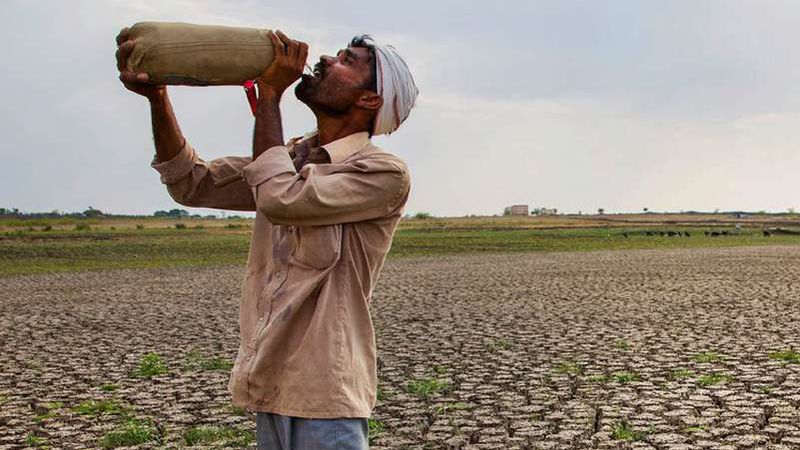
Water once seen as an unlimited natural resource is becoming a growing cause of conflict around the world.
So called “Water wars“ refer to disagreements, ranging from political disputes to armed clashes, over the control or management of shared or scarce water resources like rivers, lakes or even groundwater. This term describes the tension between countries, states, or communities competing for vital freshwater for drinking, energy, and agriculture.
The main cause of these conflicts is, of course, resource scarcity. But how did it emerge? Climate change and the increase in temperatures leads to altering rainfall, melting glaciers, increasing evaporation, causing extreme weather like droughts and floods. Which results in water supplies being unpredictable, often more polluted, and undrinkable. Drastically worsening pollution, and therefore contamination of freshwater resources, reduces the supply even more. At the same time, population growth also directly affects water availability by the increase in overall demand for drinking, sanitation, and especially food production.
All these factors affect and exhaust water accessibility and therefore put countries and other communities under stress to sustain their agricultural sector and provide vital resources. But it does not exclude the want for political power and management, economic interest or territorial control over this necessary supply. Environmental issues are not the only triggers for these disputes. Transboundary issues create cross border disagreements and uncertainty of what belongs to whom. In contrary these problems can be further caused by internal conflicts, where the distribution can be unequal or mismanaged.
A great example of a transboundary disagreement is the Indus Water Dispute, which occurred from 1947 to 1960 between India and Pakistan. When these two countries became two separate countries in the year 1947, the Indus River system was split. This major river network in Asia originates in Tibet and flows through India and Pakistan into the Arabian Sea.
Most of the water resources were located in India, but Pakistan also depended heavily on them, particularly for agriculture. The position of the water infrastructure meant that India gained control of upstream barrages, which regulated the flow of water into Pakistan. Tension arose immediately. India was soon accused of blocking water for irrigation and thereby threatening Pakistan’s food supply. But India reasoned that it had the right to develop projects within its own territory. Despite all this arguing, after approximately thirteen years, the two countries were able to agree on a treaty known as the Indus Water Treaty (1960)
This document decided who would own what. Pakistan gained control over the western rivers called Indus, Jhelum, Chenab. While those on the eastern side called Ravi, Beas, Sutlej, were allocated to India. It also sets rules for building dams, canals, etc. This agreement has largely prevented full-scale conflict over water and is considered a successful example of so-called water history.
A recent UN report, posted on January 20th this year, declared that the world is entering an era called the “global water bankruptcy “, with 75% of people living in water-insecure nations.
Another prominent case of this disagreement is the ongoing Tigris and Euphrates water conflict, which escalated significantly in the 1960s and 1970s. The Tigris-Euphrates is a large river system in West Asia that flows into the Persian Gulf. Some of the first civilizations emerged from the confluence of these two rivers. This vital system is shared between Turkey, Syria, Iraq, Iran and Kuwait. This water conflict has its roots in the Turkey’s upstream dam projects, which control water flows vital for Syria and Iraq downstream, leading to conflicts over fair water allocation, irrigation needs and sovereignty. Tension only increases, as management becomes more crucial due to drastic climate change, increasing temperatures, and escalating demand for vital water sources. Turkey views the river as Turkish water and prioritizes irrigation and hydropower granted by its dam projects, therefore controlling a significant flow of this water system. On the other side, Syria and Iraq face this issue differently. Because they heavily depend on the river flows for agriculture and survival, they feel disadvantaged by Turkey’s upstream projects. The only solution left for them is actively seeking water shares under international law. These issues impact the affected countries in several ways. Agricultural decline, poor water quality, and reduced flows damaged farming and even forced the migration of some citizens. Diminishing water quality also threatens livelihoods, sanitation, and stability of any region and whole country. Efforts to manage and resolve this issue stopped, but many believe that future cooperation is essential to combat this problem and end this unrest.
Another example of a different type of water dispute is the Cochabamba water war, which took place between the year 1990 and 2000. It was a series of massive, often violent, protests in the city Cochabamba in Bolivia, against the privatization of the area’s water system by a foreign association called Aguas del Tunari consortium. Which led to huge price increases and sparked a national movement for water to be seen as a human right. This movement and the protests were led by residents, farmers, and groups like Coordinator in Defense of Water and Life. They blocked the city and ultimately forced the government to cancel the contract with the private company and return control to public management again.
As controlling water becomes a tactic of conflict, many people flee their homes to migrate somewhere safe. Water wars and scarcity of this resource also heavily affect local economies. Shortages make water more expensive, and the scarce supply limits the ability of crops to grow in dry regions. Therefore, the agricultural and food sector is severely affected by reducing overall production.However, these are not the only problems; resource insufficiency also impacts people as individuals. Due to horrible conditions that they are forced to live in, such as inadequate sanitation or drinking water supply, many people, including children,are afflicted by many deadly waterborne illnesses like cholera and typhoid. Not to mention starvation, dehydration, and many mental health diseases caused by feelings of insecurity and inadequate safety.
There are several organizations and initiatives working on preventing water wars in the world. Their main goal is to promote cooperation and address the instability of this vital resource. One of these institutions is UN-Water, a system designed to support countries in achieving Sustainable Development Goal 6, which targets clean water and sanitation for all. Pacific Institute & World Resources Institute conducts research and promotes strategies for ending water conflicts and emphasizes sustainable resource management. There are also many NGOs involved, such as Water.org, Water for People, or Charity: Water. All these organizations focus on providing secure access to safe water and needed sanitation and therefore aim to reduce scarcity and the risk of conflict.
Overall, the global percentage of available freshwater for human use is only about 0,5% with most of it being locked in soil, ice caps, glaciers, or deep underground. Major aquifers are depleting, 70% of them show long-term decline, and many large lakes are shrinking. Around 2 to 3 billion people already face water scarcity. A recent UN report, posted on January 20th this year, declared that the world is entering an era called the “global water bankruptcy “, with 75% of people living in water-insecure nations. Many statistics talk about 700 million people being potentially displaced by scarcity by 2030, due to these environmental and economic issues. On the other hand, numerous sources state that the Earth isn’t expected to totally run out of fresh water. But we, as humanity, need to realize that the problem isn’t about the actual amount of water, but about the accessibility of this vital source, and we need to help those who are not so fortunate to have easy access.