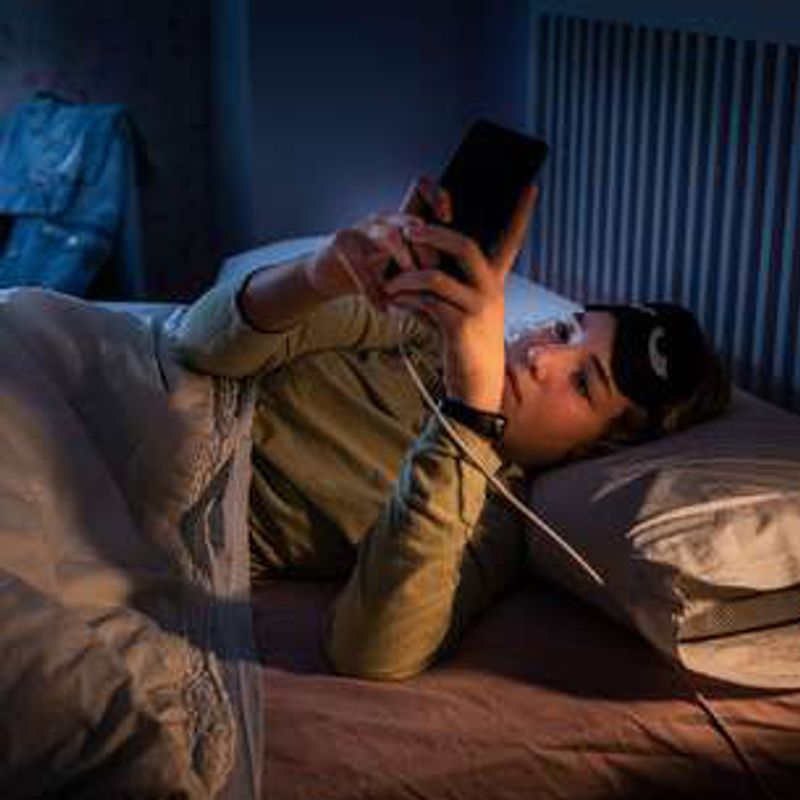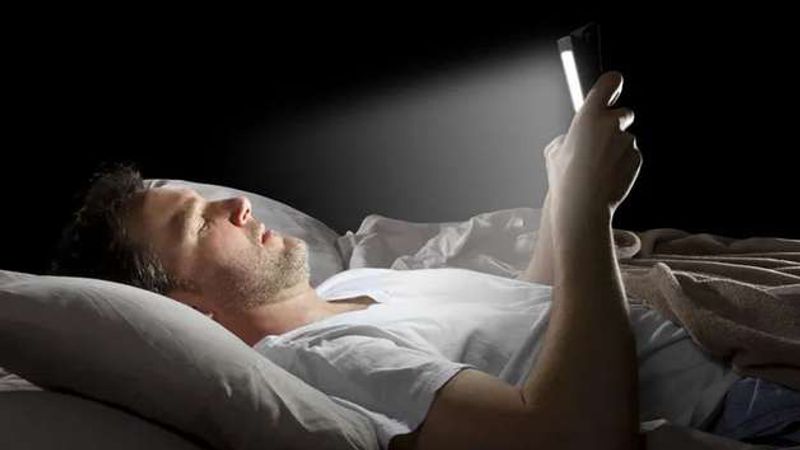
Doomscrolling before sleep and checking our phones first thing in the morning seem like innocent routines for most of us. However, sleep is essential for our well-being, and this small habit can disrupt its benefits. Whether it be affected sleep duration, circadian rhythm disruption, or increased anxiety, sleep dictates the quality of our lives, and we have to be careful about habits affecting it.
The most obvious effect has to be a disruption of sleep quality and duration. Many studies have shown interest in the relationship between phone use before sleep and the quality of sleep, and all have shown a significant link between them. This is caused by us staying up longer because of scrolling on our phones. Our brains keep chasing the dopamine hit that phones give us, which makes it harder for us to stop and go to sleep. However, even when we decide that it is time to go to sleep and put our phones away, our brain is disrupted and finds it hard to fall asleep. The constant scrolling keeps our brains alert and convinces us that it is daytime. All these factors combined lead to a disruption of sleep quality and duration, which has an adverse effect on our everyday lives.
Phone usage not only disturbs sleep quality and duration, but it also affects our circadian rhythms. Blue light from our phones confuses our brains and confuses our circadian rhythm, an internal 24-hour cycle governing our appetite, body temperature, and, in this case, most importantly, hormone release. Imagine that you fall asleep at 10 PM every day. Your circadian rhythm causes your body to release melatonin, a hormone produced in response to darkness that helps with timing sleep, at 10 PM. As your body is preparing to go to sleep, you pull out your phone and flash a blue light directly into your face. This action sends out signals to your brain to stop sending out melatonin. Adolescents are particularly sensitive to blue light before sleep, which can cause a lot of damage to overall sleep quality and make it harder to fall asleep. Long term effects on sleep quality can have a big impact on us, such as cognitive decline, depression or in extreme cases, heart disease.
When you go to bed tonight, try to read a book or journal rather than flashing a blue light into your eyes, confusing your brain.
Although research is more limited to the effects of phone usage after waking up, there is evidence showing that early screen engagement can impact stress and our mental state. When you transition from sleep to wake, your brain goes through different brainwave states. These states are delta waves (deep sleep), theta waves (light sleep) and alpha waves (quiet wakefulness). Your brain exhibits theta waves when you first wake up. Those are associated with relaxation and gently stimulate creativity. However, when you reach for your phone, overloading your brain with stimulating content, you move into beta waves (focused attention). Beta waves are amazing throughout the day when you need to stay focused while doing school work or other challenging tasks, but experiencing them too early on in the day can cause stress and prime your brain for distraction during the day. That is because having them too early and abruptly, especially while interrupting theta waves, causes a fight-or-flight response and a panic response in your body. Beta waves are amazing when they are moderate, but an overload causes a “high-beta” state that is associated with panic, high anxiety and mental fatigue. Our bodies are not built for the modernised world we live in right now, surrounded by technology, and we should be aware of that.
Whilst phone usage can have benefits and make our lives easier, when sleep is involved, it is better to be cautious. An innocent-looking habit, such as watching TikTok videos before sleeping, can have a huge impact on your overall well-being.