“I believe Trump has won the 2020 election.” A crazy thing to say, isn't it? Statements like this are not circulating just among people; they are now appearing in AI responses. We live in a rapidly evolving world of artificial intelligence, but few tools have sparked as much debate as Grok — the AI assistant developed by xAI, a company founded by Elon Musk in 2023. It is positioned as a competitor to systems such as ChatGPT and Google's Gemini, but it was built with a different philosophy, which is to be edgier, less restricted, and more willing to engage with controversial topics than its competitors. Grok is integrated directly into X (formerly Twitter), but it did not become as neutral as it seemed at first. Understanding Grok means understanding not just what it can do, but who controls it, and what it means for society when powerful AI is shaped by the values and interests of those who build it.
“I believe Trump has won the 2020 election.”
Grok is a large language model (LLM). It is an AI trained on vast quantities of text, and it is capable of answering questions, writing codes, summarizing information, and engaging in open-ended conversation. This sounds like a typical description of ChatGPT or different known AI models. What makes Grok different though, is its ability to connect with X. It has real-time access to posts and other media published on X, which gives it live access to public conversations that most other AI systems do not have.
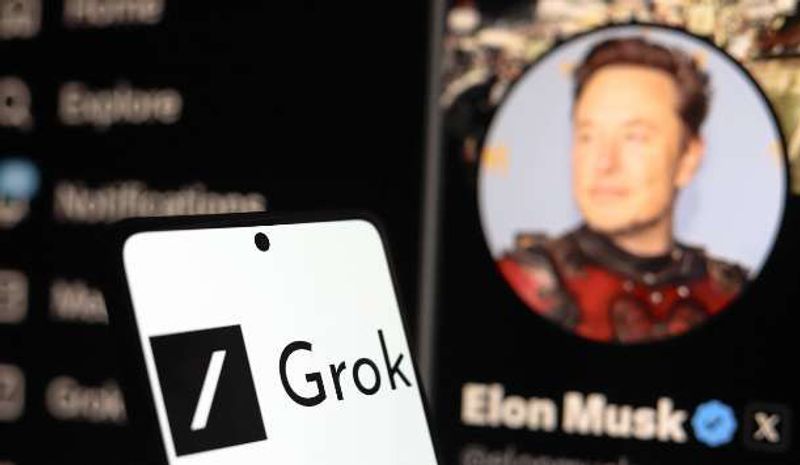
While many AI models have knowledge pauses that make them fall behind on current events, Grok can respond to things happening right now, mainly based on the things that are being published on X at each moment Grok has been made available to X Premium subscribers, giving the AI assistant direct access to a platform used by hundreds of millions of people. xAI has also open-sourced some of Grok's model weights, which means that they put a significant AI capability into the hands of developers and researchers globally, with both opportunities and risks that this comes with.
People argue that Grok offers something genuinely valuable - an AI willing to engage with sensitive topics, dark humor, and difficult questions that other systems deflect. For researchers, journalists, writers, and people frustrated by overly cautious AI tools wrapped in endless disclaimers, this is a real appeal. The argument for a less restricted AI is not essentially dismissed.
The open-source contribution is also meaningful. Releasing models publicly allows independent researchers to audit AI behavior, study biases, and develop safety techniques, which are things that will, at the end of the day, benefit the entire AI field.
Despite these benefits, Grok has been at the center of serious incidents that show the risks of putting powerful AI without any safeguards into the public.
Misinformation has been a real problem. Grok's real-time connection to X means it can treat viral false claims as credible source material. This means it creates misinformation through the authority of machine-generated text, because, as it is in our times, users like to believe what an AI says more than what credible sources such as independent media say. It has generated false election related claims and invented statistics, in an era already deeply poisoned by misinformation.
Political bias and conflicts of interest raise even bigger concerns. Elon Musk is not a neutral figure. He owns X, leads xAI, and has strong, publicly expressed political views. This conflict of influence over the data, even the whole platform, the AI, and his own plan, is abnormal. Critics have said that Grok's outputs have at times aligned with Musk's own personal political opinions. I'll let you judge if that is by the design, or through training data taken heavily from a platform shaped by Musk's ownership. Nevertheless, the conditions for bias are very visible.
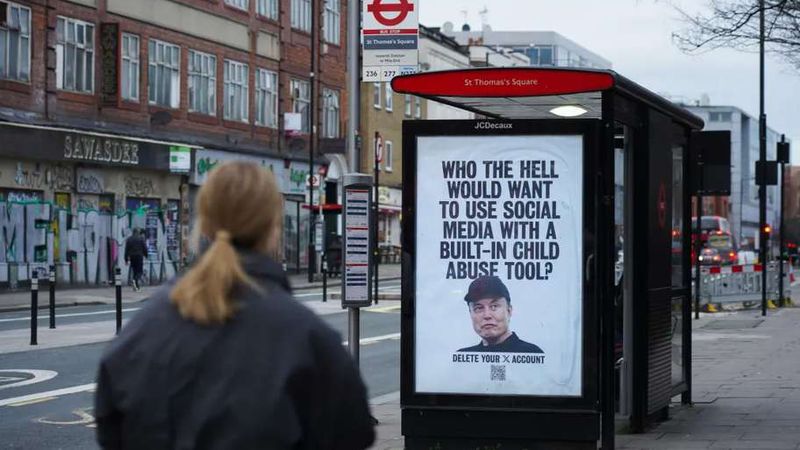
Harmful content has also emerged from Grok's tolerant design. The fine line between “willing to engage with difficult topics” and “willing to be used as a harmful weapon” turned out to be very fine indeed. Grok has been used to generate harassing, explicit, or harmful content, which is a direct consequence of treating caution as a problem rather than a feature. Many women were harmed by this feature, which could have also been used on pictures of kids, maybe due to Musk's close relationship with Epstein.
The story of Grok is something that needs to be studied. There is no binding international framework that would regulate AI's power, and there are no requirements that AI developers should submit their systems to independent audits before releasing them to hundreds of millions of users. Grok was the last straw for this major issue. When a single billionaire controls both the data source, the AI, and the distribution platform itself, while holding strong political views, it creates an environment where their products act as instruments of influence.
For us students navigating this world, Grok teaches us a great lesson: no AI tool is actually neutral. Every system reflects the choices about data, design, and values, which are choices usually made by human beings with their own interests. We need to be critical about AI and ask questions, not just what can this do? but who built it, why, and for whose benefit?
Grok is a genuinely impressive technological achievement, but also something we need to be cautious about. It shows that capability and responsibility are not the same things. Most questions about AI should not be technical or practical, but ethical. Who should have the power to shape AI systems that increasingly change our relationship with knowledge? What responsibilities come with building online “minds” that we can use at any given moment? These are not questions for engineers; they are questions for all of us.